How do you grow charities in a headwind?
After years of being immersed in the world of storytelling for charities, we have become highly alert to the headwinds that are battering the sector.
The resource crunch inside charities is extreme, from dwindling donations, to the impact of national insurance contribution rises.
So many parts of our social infrastructure feel like they are at breaking point, and so many points of progress feel like they are rolling back.
And audiences, from donors to supporters, from partners to policy-makers, are overwhelmed, tired, and tuning out.
Well, when the odds seem stacked against you, storytelling can turn the tide.
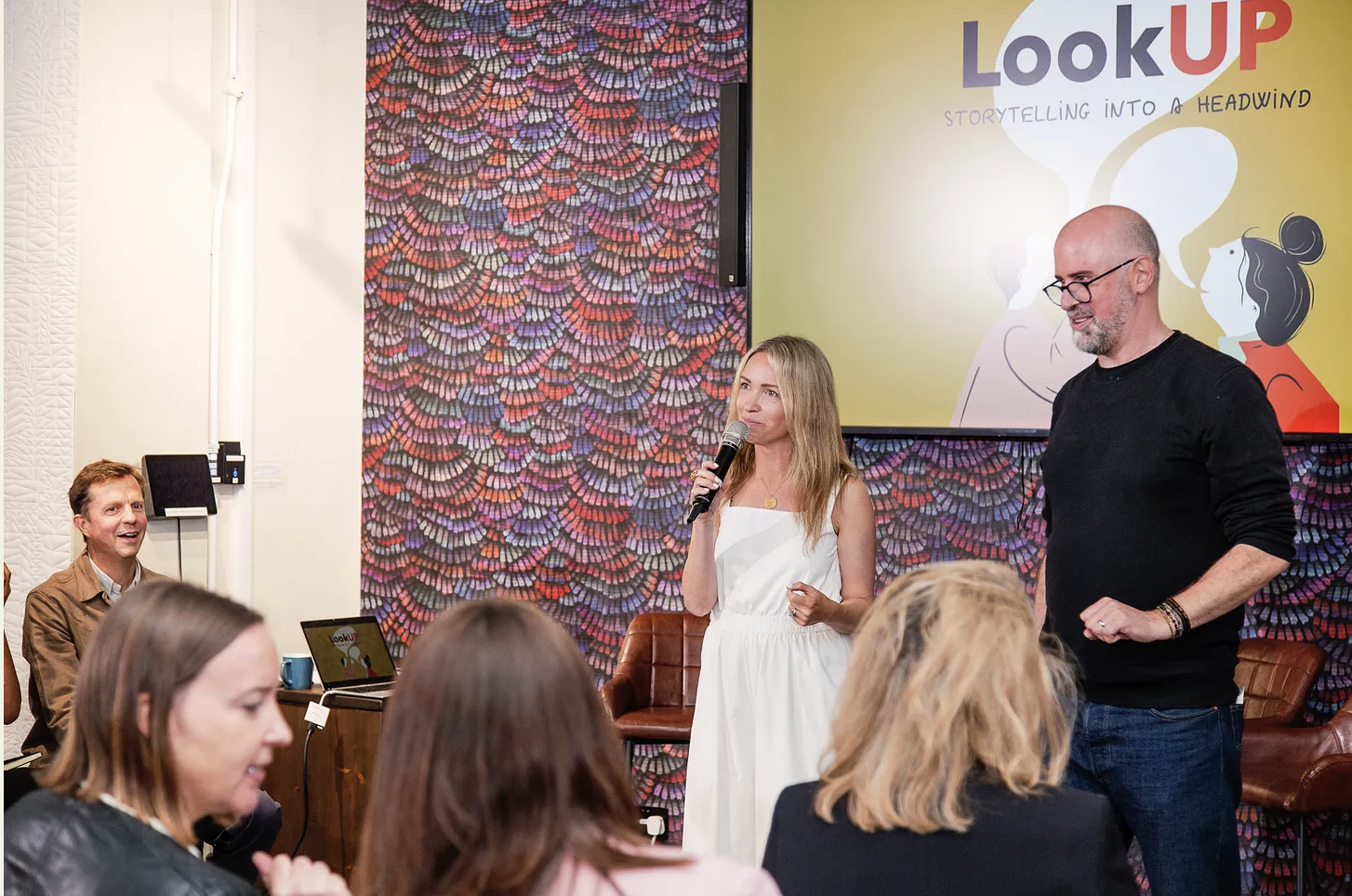
When we brought people from across the sector together for May LookUP event, StoryTelling in a Headwind, we felt an incredible sense of solidarity and inspiration.
And from all of the amazing organisations who gave their time to take part in our panels (The Alzheimer’s Society, the Youth Sports Trust, Workstyle, Medialab, Smartworks, NABS, CALM, the SHM Foundation, Macmillan Cancer Support) we heard brilliant examples of StoryTelling that is making a real difference.
What we heard was urgent, honest, and galvanising: charities and not-for-profits need to tell different kinds of stories, in different kinds of ways, starting right now.
We’ve outlined a few themes below from the session. For the full piece, check out our substack with all the session videos here.
1. We need visions that people can feel
For a charity, storytelling isn’t just a functional skill, to be pulled out of the bag for media appearances and funding bids. It’s a crucial element of how you mobilise people, and drive change. And we all need positive future stories to work towards.
And as charities look to change the long-term, being a storytelling leader is more important than ever: shining a light on a new, better path, and motivating your people as they deal with the friction and exposure that comes with change.
Often this means telling a story about a different future. And the future is often a difficult thing for people to feel, when the right-now feels so overwhelming.
2. We need to meet problems with progress
No charity can thrive without a compelling and emotive articulation of the problem it is there to solve, and the jeopardy that exists around it. But in a world hyper-saturated with bad news, problems are the most overcrowded market there is.
If we want to draw people to our causes, we need to start building a greater sense of agency for our audiences, and a greater sense of belief in progress.
What people want to believe, more than ever, is that change is possible, and that they can help.
3. We need stable goals, and flexible minds
Charities are full of highly motivated, highly intelligent people, and that can result in instinct to debate and toy with vision and goal - to tweak it, to reword it, to refine it - and then to expect that the world is waiting to hear what we have to say once we’ve finished out work.
In reality, the most successful charities and not-for-profits we work with have this flipped around. Changes to vision are rare, significant, and decisive. Apart from that vision and goals are consistent over time. But the story and service delivery keeps evolving in response to changes in circumstance and culture.
4. We need everyone to serve, and to sell
A great charity houses an extremely wide range of skills. That requires a lot of mutual respect, and leaving people a bit of space to get their individual jobs done.
But the truth is that there is also incredible power in cross-pollination.
Often the most powerful advocates for a charity’s story will be those who are delivering services, or driving operations every day. They may not always feel deep confidence in their storytelling ability, but when equipped with the right skills and given support, they can be incredibly effective storytellers for the organisation.
Equally, fundraisers and marketers benefit from a different kind of perspective, that of the ‘outside-in’, and that can be an incredibly useful driver of service innovation, if the insight flows in the right way.
5. We need to keep joining the dots
Necessity is the mother of invention. And the pressure of these times is forcing a lot of charities to break down historical siloes, and collaborate better - from co-ordinating story beats, to capturing stories of impact.
These siloes exist all over the place - between fundraising and brand marketing, between services and fundraising, between operational teams and user or client-facing teams - and each barrier is preventing some kind of alchemy.
Siloes are often difficult to see from the inside. But they are very evident to your trusted external partners, and sometimes fixing them needs external help.
For the rest of the out-takes from the day, and full videos from our many experts, check out the full piece here.
What’s the next chapter?
This is a crucial moment for charities to raise the bar of StoryTelling.
The headwinds aren’t going anywhere. The pressure on people working in the sector feels very real. But the power of story, told with boldness and humanity, and supported with aligned teams, can cut through and clear a path for progress.
It can win hearts, unlock funding, and spark action.
If you or a charity you know need help right now, whether it’s unlocking your narrative, up-skilling your teams, or cutting through better, LookUP is here to help.